
Gym Intelligence: The Missing Layer in Modern Fitness Operations
What Does Gym Intelligence Actually Mean?
The term "gym intelligence" gets used broadly across fitness technology. ABC Fitness references intelligent automation. Zenoti positions AI-driven insights as a core feature. Vi markets itself as an intelligent coaching platform. Most major platforms in the space now include some version of "intelligence" in their positioning. But most of what is called intelligence in fitness technology is really just reporting. A smarter dashboard.
Faster access to the same attendance logs and billing records. Filters and visualizations applied to data that was always there. That is not intelligence. That is organized information. Intelligence requires interpretation.
For multi-location clubs, this is especially important when different systems tell different stories. Explore the operational cost of disconnected data.
It is the difference between telling you how many members visited this week and telling you which of those members are on a path toward cancellation — and what behavioral signals led to that conclusion. It is the difference between generating a retention report after members leave and identifying the members at risk before they make the decision. Most platforms process data. True gym intelligence uses that data to understand behavior, surface patterns, and help operators make better decisions about their communities.
That is the distinction Groe was built around. Not just capturing what happened in your gym, but understanding what it means — and what it signals about what is coming next.
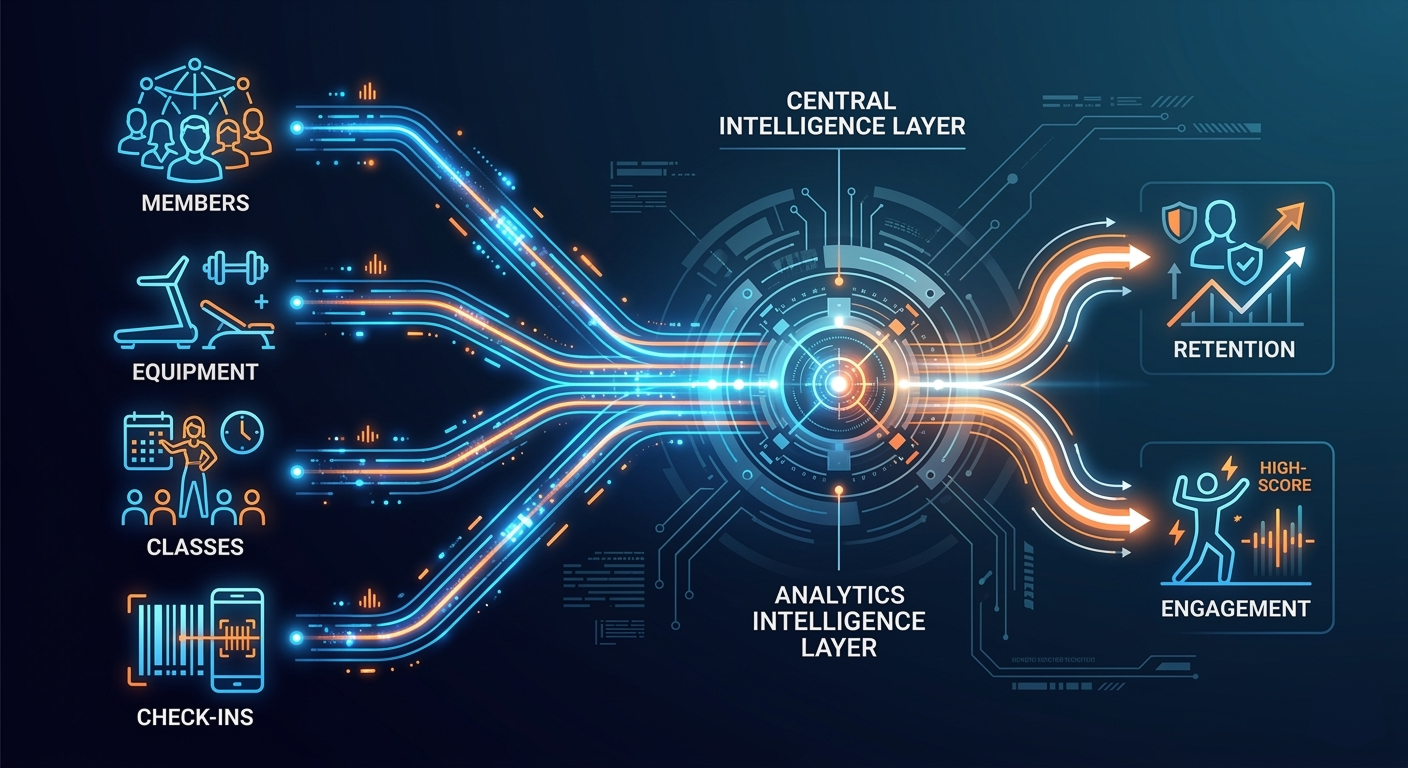
Every gym generates a large amount of data every day. Member check-ins, class attendance, equipment usage, coaching sessions, and facility traffic all produce signals about how people interact with the gym environment. Most gym management systems record these activities. They track transactions, attendance, and scheduling.
But recording activity is not the same as understanding what it means. Groe helps gyms interpret the patterns inside their operational data. By analyzing how members interact with classes, equipment, coaches, and the facility over time, Groe surfaces signals that show how engagement is developing across the gym. Instead of simply storing transactions, the platform analyzes behavioral patterns to help operators understand:
- Engagement patterns across equipment, staff, and community
- Attendance trends
- Motivation signals
- Early indicators of churn risk
- Key moments in a member's journey
This helps gyms move from reactive reporting to more proactive decisions about operations and member engagement. In most gyms, members do not cancel suddenly. Their attendance patterns usually change gradually first.

Attendance Trends Tell You What Happened. Not What It Means.
Most gym software can answer one question: Did they show up? It can tell you that your member visited 14 times in January, 9 times in February, and 5 times in March. A trend line pointing downward. That number has a story in it.
But the software does not tell you the story. Was this a scheduling change? A seasonal slowdown? An injury? A change in motivation? The early signal of a cancellation that is coming in 30 days? Attendance data captures activity.
It does not explain behavior. And the difference between those two things is the difference between a gym that responds and a gym that reacts.
Attendance trends, by themselves, are insufficient for one simple reason: they can only tell you frequency, not trajectory. And frequency without context produces false conclusions. A member who attends twice a week for twelve consistent months is telling you something different than a member who attended four times a week for six months and now attends twice a week.
The current frequency looks the same. The behavioral pattern is not. Attendance trends also cannot distinguish between:
- A member reducing visits due to an injury (likely to return)
- A member reducing visits due to declining motivation (at elevated risk)
- A member reducing visits due to a schedule change (no retention risk)
- A member reducing visits in the six weeks before they cancel (urgent intervention needed)
These look identical in a standard attendance report. They require entirely different responses. Groe looks at the pattern, not just the count. Not just how often someone comes, but how their behavior has shifted over time — across classes, equipment, coaching interactions, and facility use.
A member attending once a week for six consistent months is one signal. A member who drops from five visits to one over six weeks is a fundamentally different signal. The numbers may look similar. The meaning is not. Which members are quietly disengaging weeks before they decide to cancel?
Which new members are still searching for their rhythm before they quietly give up? Which attendance changes are temporary adjustments, and which reflect fading motivation? These questions require more than a trend line. They require interpretation across multiple behavioral dimensions simultaneously. When you can answer them, you can respond earlier.
And earlier response is what helps turn at-risk members into long-term ones. You can see how this works in practice: Identify at-risk gym members
Your Platforms Do Their Job. Groe Does What They Cannot.
Most gyms already run on solid operational platforms. ABC Fitness. Zenoti. Daxko. Club Automation. Mindbody. Wodify. PushPress.
They manage memberships, billing, scheduling, and attendance. They were built for operations, and they do that well. But here is what every one of them shares in common. They record. They do not interpret.
ABC Fitness can tell you a member checked in eight times last month. It will not tell you that the pattern of those eight check-ins — the times, the classes skipped, the equipment avoided — suggests that member is beginning to disengage.
Zenoti can manage your booking schedule with precision. It will not tell you which instructors are quietly driving long-term retention, or which classes members stop attending in the weeks before they cancel.
Daxko can generate a membership report on demand. It will not surface the behavioral signals that appear weeks before that membership goes inactive.
Vi can support coaching interactions. It does not connect those interactions to facility-wide engagement patterns and show you what is shifting across your community. These platforms see their slice of the operation. They were not built to see the whole picture.
What Groe adds on top: Groe sits above your existing software stack and connects the signals each platform generates. That connection unlocks a layer of intelligence none of them can produce alone.
Cross-system behavioral pattern recognition. Your scheduling platform sees booking data. Your membership software sees check-ins. Your billing system sees payment history. Groe connects all of it and identifies behavioral patterns that span systems — patterns that are invisible when each data source is viewed in isolation.
Predictive risk scoring. Instead of showing you who already cancelled, Groe identifies members whose behavioral patterns match those of members who have cancelled in the past. This gives your team time to intervene before the decision is made.
Automated intervention triggers. When a member's engagement pattern crosses a risk threshold, Groe can trigger alerts and workflows for your staff — without them having to manually pull reports or monitor individual accounts.
Community health metrics. Beyond individual members, Groe surfaces patterns across your entire community. Which programs are building strong retention? Which classes are losing members over time? Which operational shifts are creating friction? These insights are not available in any single platform because they require synthesizing data across all of them.
Operational anomaly detection. When equipment usage patterns suggest a machine is malfunctioning, or when class attendance suddenly drops in a way that does not match seasonal norms, Groe flags the anomaly. Earlier visibility keeps operations running smoothly and prevents small problems from compounding into member experience issues.
Your existing platforms continue to run daily operations. Groe adds the layer that tells you what those operations are actually producing — and where your community needs attention before it is too late to act. Learn more about how Groe connects operations and member behavior: Unified Operations and Member Data
The Retention Gap in Fitness
Retention has always been one of the most difficult challenges in the fitness industry. Millions of people join gyms each year with strong intentions to improve their health. But building consistent habits takes time, and many members struggle to maintain regular attendance. Several operational factors often contribute to declining engagement:
- Inconsistent onboarding experiences
- Limited visibility into changing attendance patterns
- Lack of insight into early disengagement signals
- Operational issues that affect the member experience
Most members do not leave because of a single incident. More often, their attendance slowly declines until the gym is no longer part of their routine. Groe helps connect operational and behavioral signals across the gym environment. Through onboarding automation, gyms can guide new members during the critical first weeks when habits are forming.
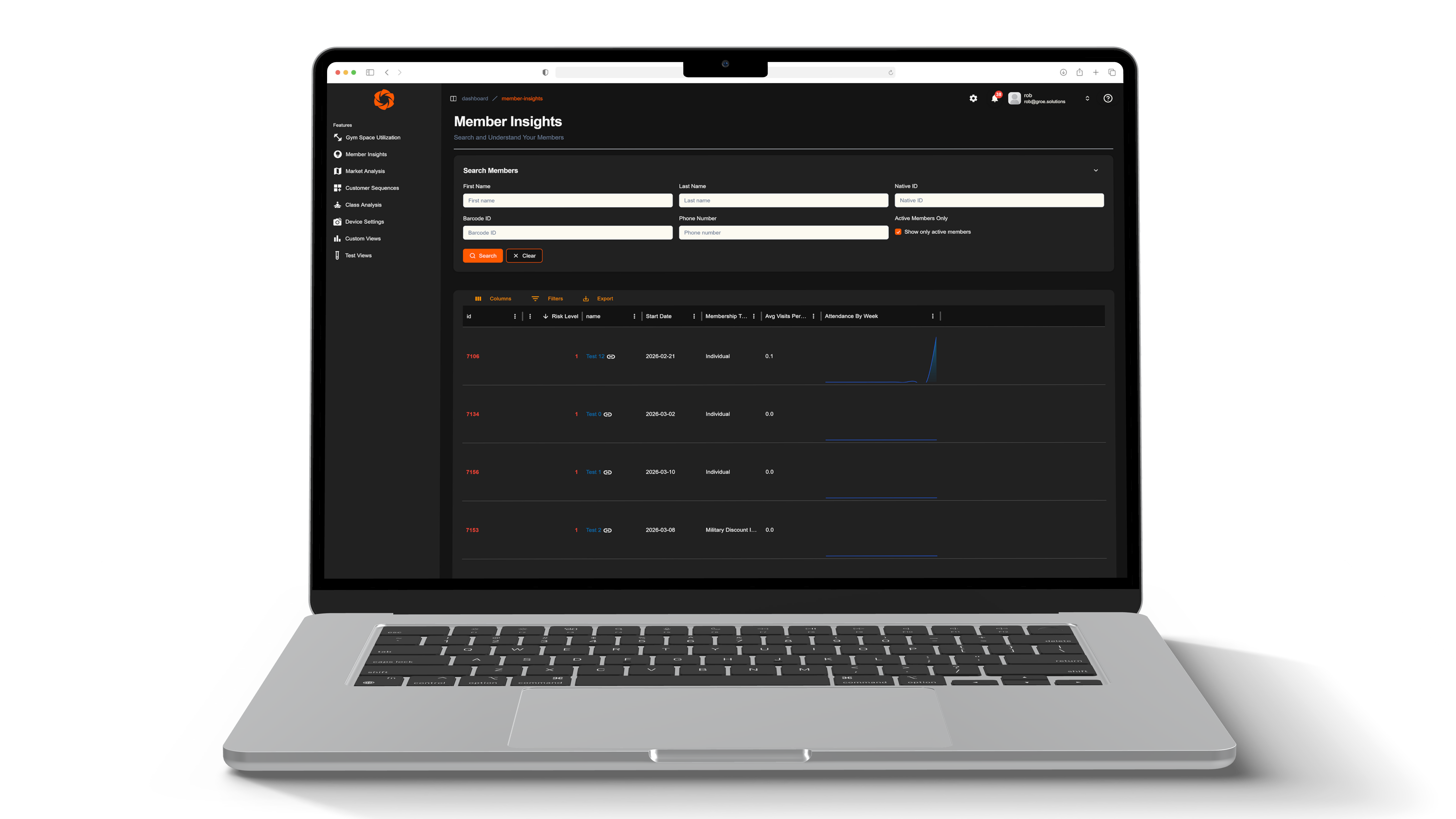
Through risk analysis, the platform identifies patterns that may indicate declining engagement.
Through market insights and operational analytics, operators gain a clearer understanding of what is happening inside their gym and across their local market.
Many gyms begin implementing these insights through Groe's Visionary platform tier, which introduces advanced class analysis, gym and equipment utilization insights, and early risk detection tools designed to help operators identify disengagement before cancellations occur. This level of visibility allows gym staff to intervene earlier and support members while habits are still forming. This broader view helps gyms identify:
- Which members are building consistent habits
- Which members may be drifting away
- Which programs are strengthening community
- Which operational areas may need attention
By identifying these patterns earlier, gyms can respond before disengagement turns into cancellation.
The Shift Happening in Fitness Technology
The fitness industry is beginning to rethink how technology should support long-term member engagement. For many years, the focus of fitness technology centered on activity tracking. Wearables, gamification features, leaderboards, and reward systems were introduced to motivate participation. These tools can create short-term engagement.
But many operators are beginning to recognize that they do not always produce lasting habits. Behavioral psychology research suggests that external rewards such as points and badges often produce temporary motivation rather than long-term behavior change. Research on intrinsic motivation, including work within Self-Determination Theory, shows that sustainable habits are more strongly linked to factors such as autonomy, progress, and social connection. Supporting research: Self-Determination Theory
As a result, many gyms are shifting their focus toward understanding how members actually behave within the facility environment. Instead of simply tracking activity, operators want to understand:
- Which members are developing routines
- Which members are disengaging
- Which experiences build stronger community connections
This shift is driving demand for systems that help interpret operational data rather than simply record it. Platforms like Groe's Visionary package are designed for this shift. Instead of only reporting activity, Visionary analyzes behavioral patterns across attendance, facility usage, and member engagement to help operators identify trends that affect retention and community growth.
A Simple Example
Consider a common operational issue: broken equipment. In many gyms, equipment problems are only identified once a member reports them. Until then, the issue may go unnoticed. Now imagine analyzing equipment usage patterns instead.
A cable machine that normally sees steady use suddenly shows unusual behavior in the data. Multiple members approach the machine, begin a set, and stop after only a few seconds. Several members attempt to use it, but none complete a normal workout. Individually, these short sessions may not appear unusual.
But when analyzed together, they form a pattern that suggests a potential issue. Groe detects the anomaly and alerts staff that the equipment may require inspection. Capabilities like equipment utilization insights and anomaly detection are included in Groe's Visionary tier, which helps gyms identify operational issues earlier by analyzing usage patterns across the facility.
A staff member checks the machine, confirms the issue, and places a repair request. Instead of remaining broken for several days before someone reports it, the problem is identified quickly. Earlier visibility helps maintain consistent operations. Consistent operations improve the member experience. And a better experience helps support long-term retention.
Why This Layer Matters
Fitness operators increasingly rely on multiple software systems to run their businesses. While these platforms handle essential operational functions, they often operate independently and provide limited visibility across the full member journey. Groe sits above the existing software stack and connects the signals between systems.
This allows operators to interpret patterns more clearly and make better decisions about operations, programming, and member engagement. When gyms better understand how members interact with their environment, they can improve retention and strengthen their communities. We explore this impact further here: ROI of Gym Operations Intelligence
The Connection That Keeps Members Coming Back
Technology will continue to evolve within the fitness industry. New tools will emerge, and data will become increasingly available. But one factor will remain constant. People join gyms not only to exercise, but to feel part of a community.
Successful gyms create environments where members feel supported, accountable, and connected to others pursuing similar goals. Groe helps operators understand the signals and patterns that shape those experiences. By connecting operational data with member behavior, gyms gain clearer insight into how their communities are developing.
The result is a stronger foundation for long-term engagement. And ultimately, communities that keep people active for life.