
Most gyms discover churn after a member cancels. Groe’s member risk analysis uses behavioral analytics and attendance patterns to detect at-risk members early and improve retention.
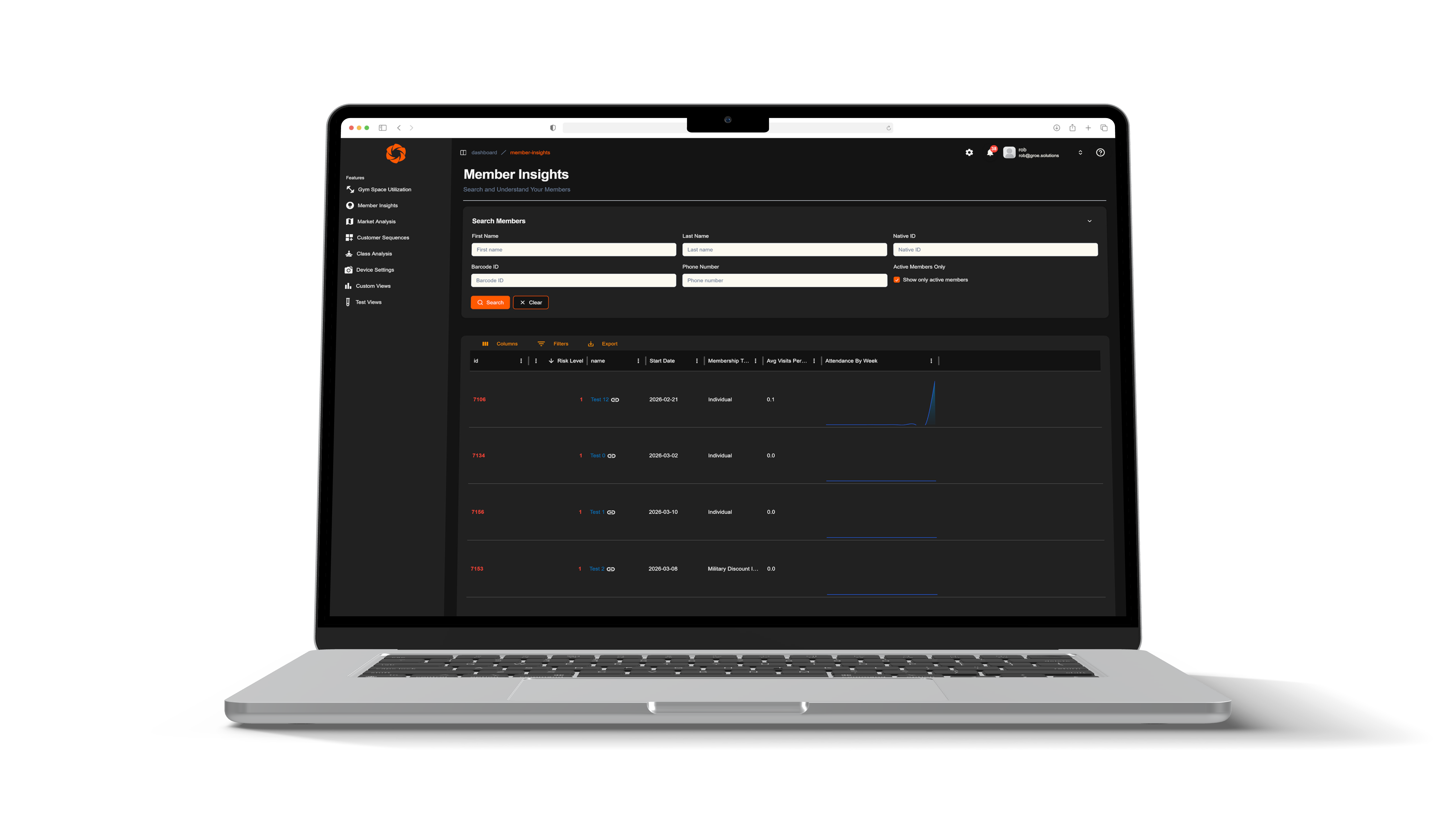
Member cancellations rarely happen suddenly. They are usually preceded by small behavioral changes like: declining attendance, irregular workout patterns, longer gaps between visits. Without fitness member analytics, these warning signs go unnoticed until a member decides to cancel. Groe continuously analyzes engagement data to identify these early signals so your team can intervene while there’s still time to retain the member.


Groe analyzes attendance patterns and engagement signals across your membership base.
Behavior changes are translated into risk scores that identify potential churn risk.
Staff receive alerts when members move into higher risk categories.
Your team can intervene with personal outreach, coaching, or offers before the member decides to cancel.
The GroeFit Risk Score is a simple, behavior-based indicator that highlights members who may be disengaging. It’s designed to surface early warning signs—such as changes in visit frequency—so operators can take proactive steps before cancellation occurs.
Risk scores are primarily driven by changes in engagement patterns over time, such as fewer visits or longer gaps between check-ins. The score reflects behavioral shifts rather than static member attributes or assumptions.
Yes. GroeFit allows operators to define what “high risk” means for their business. Thresholds can be adjusted based on membership type, usage expectations, or operational preferences.
Not at all. Risk scores are designed to support staff—not replace human insight. The goal is to help teams focus attention where it may be needed, while still relying on relationships and context to guide outreach.