
Peak Hour Management Strategies for Gyms: Reduce Crowding, Increase Satisfaction
Introduction: The Peak Hour Problem Every Gym Faces
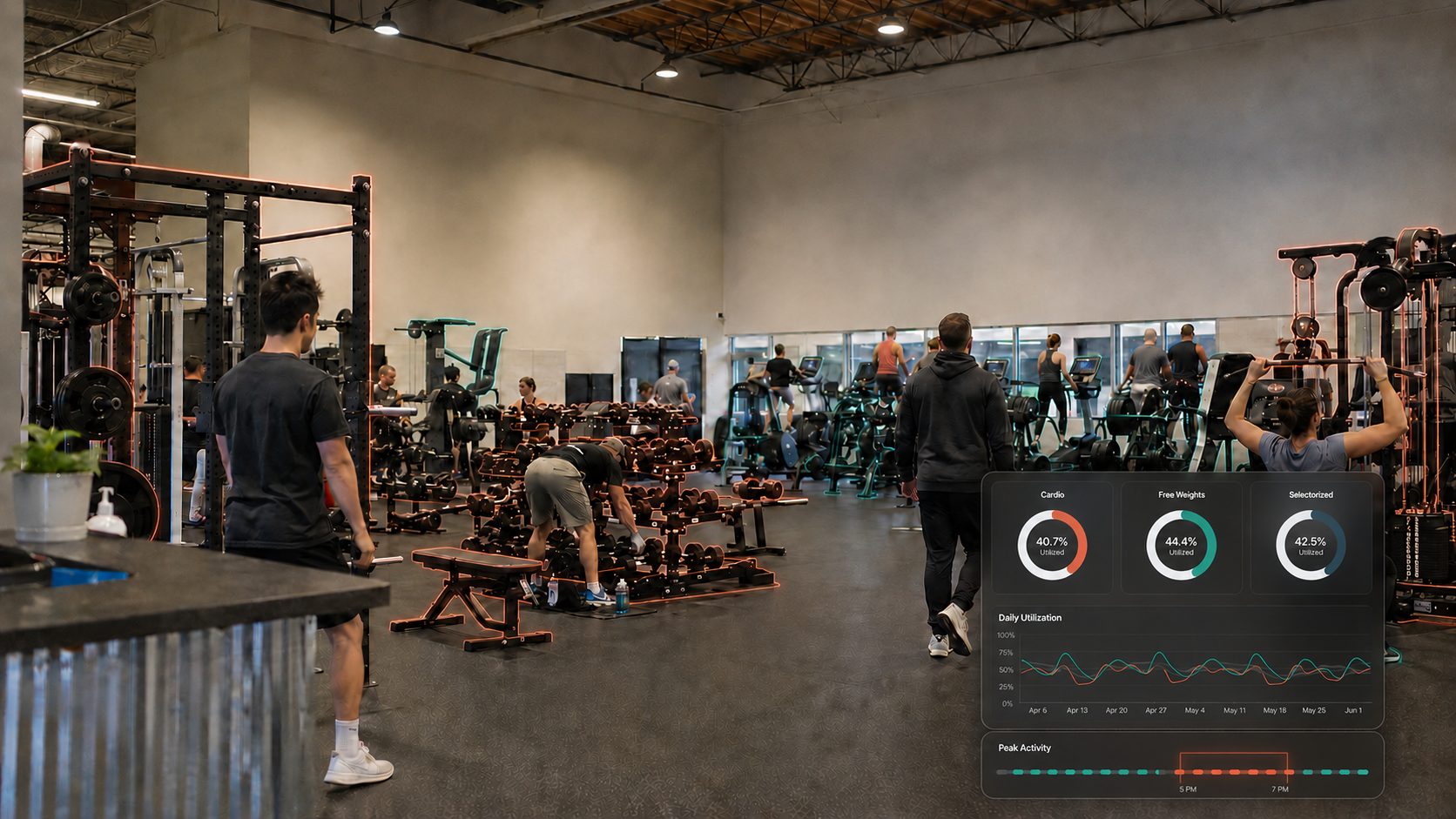
Every gym owner knows the pattern: 5-7 PM on weekdays, the facility transforms. What was a quiet space becomes a bustling hub where equipment availability plummets, member frustration rises, and the risk of cancellations increases.
Peak-hour planning can also benefit from gym layout and member-flow analysis.
But peak hours don't have to be a problem—they can be an opportunity. When managed correctly, busy periods demonstrate your gym's popularity while showcasing your ability to deliver a great experience even under pressure.
This guide covers practical, actionable strategies to transform your peak hours from a liability into a competitive advantage.
Understanding Your Peak Hour Patterns
Before implementing solutions, you need data. Most gyms make the mistake of assuming they know their busy times without verifying the patterns.
Data Collection Methods:
- Check-in Analytics: Use your membership system to identify exact peak times by day of week
- Zone Monitoring: Track which areas get busiest (strength floor vs. cardio vs. functional zones)
- Equipment Usage Data: Identify which machines have the longest wait times
- Member Surveys: Ask members when they experience the most frustration
Pro Tip: Don't rely on memory or staff anecdotes. Data reveals patterns you might miss, like Tuesday evenings being busier than Mondays, or specific equipment bottlenecks you hadn't noticed.
Strategy 1: Staggered Scheduling and Programming
Class Timing Optimization
If you offer classes, their timing can either alleviate or exacerbate peak hour crowding.
Member Incentives for Off-Peak Visits
Reward members who use the gym during less busy times:
| Incentive Type | Implementation | Off-Peak Target Times | Expected Impact |
|---|---|---|---|
| Loyalty Points | 2x points for visits before 4 PM or after 8 PM | Early morning, late evening | 15-20% shift from peak hours |
| Priority Booking | Off-peak members get 24-hour early access to popular classes | All non-peak hours | 10-15% increase in off-peak class attendance |
| Social Recognition | "Early Bird Club" recognition in newsletter and app | Before 7 AM, after 8 PM | Builds community around off-peak usage |
| Discount Programs | 10% discount on personal training during off-peak | Weekday mid-mornings, weekend afternoons | Incremental revenue during slow periods |
Strategy 2: Equipment and Zone Management
Create "Peak Hour Only" Equipment Zones
Designate specific areas or equipment for peak hour overflow:
| Equipment Zone | Peak Hour Time Limit | Visual Cue System | Staff Monitoring Priority |
|---|---|---|---|
| Cardio Machines | 30 minutes maximum | Red/Green timer lights | High - Frequent turnover needed |
| Squat Racks & Power Cages | 45 minutes maximum | Color-coded towel system | Medium - Monitor for equipment sharing |
| Cable Machines | 30 minutes per station | Digital queue display | High - Popular and often monopolized |
| Functional Training Turf | 60 minutes for individual use | Zone occupancy lights | Medium - Space management focus |
| Dumbbell Area | No time limit, but clear return policy | Designated return stations | Low - Self-managed with clear systems |
Implement Clear Usage Guidelines
During peak hours, establish and communicate clear rules:
- Time Limits: 30 minutes on cardio, 45 minutes on strength equipment
- Equipment Sharing: Encourage "work in" culture for weight stations
- Clean-up Stations: Designated areas for phone use between sets
Visual Cues Work Best: Use colored towels, timers, or digital displays to indicate time limits without staff intervention.
Ready to Transform Your Peak Hour Experience?
Strategy 3: Staff Deployment and Member Communication
Peak Hour Staffing Strategy
Don't just have more staff—have the RIGHT staff in the RIGHT places:
- Floor Monitors: Staff dedicated to equipment turnover and etiquette
- Welcome Ambassadors: Greet members and set expectations at entry
- Quick-help Stations: Designated areas for fast form checks or questions
Proactive Member Communication
Members are more tolerant when they know what to expect:
Before Arrival:
- Live usage updates on your app/website
- Peak hour alerts with suggested alternatives
- "Best time to visit" recommendations
On Arrival:
- Digital signage showing current zone occupancy
- Staff greetings that acknowledge the busy period
- Quick orientation to less-crowded areas
Strategy 4: Technology Solutions for Peak Hour Management
Live Usage Monitoring
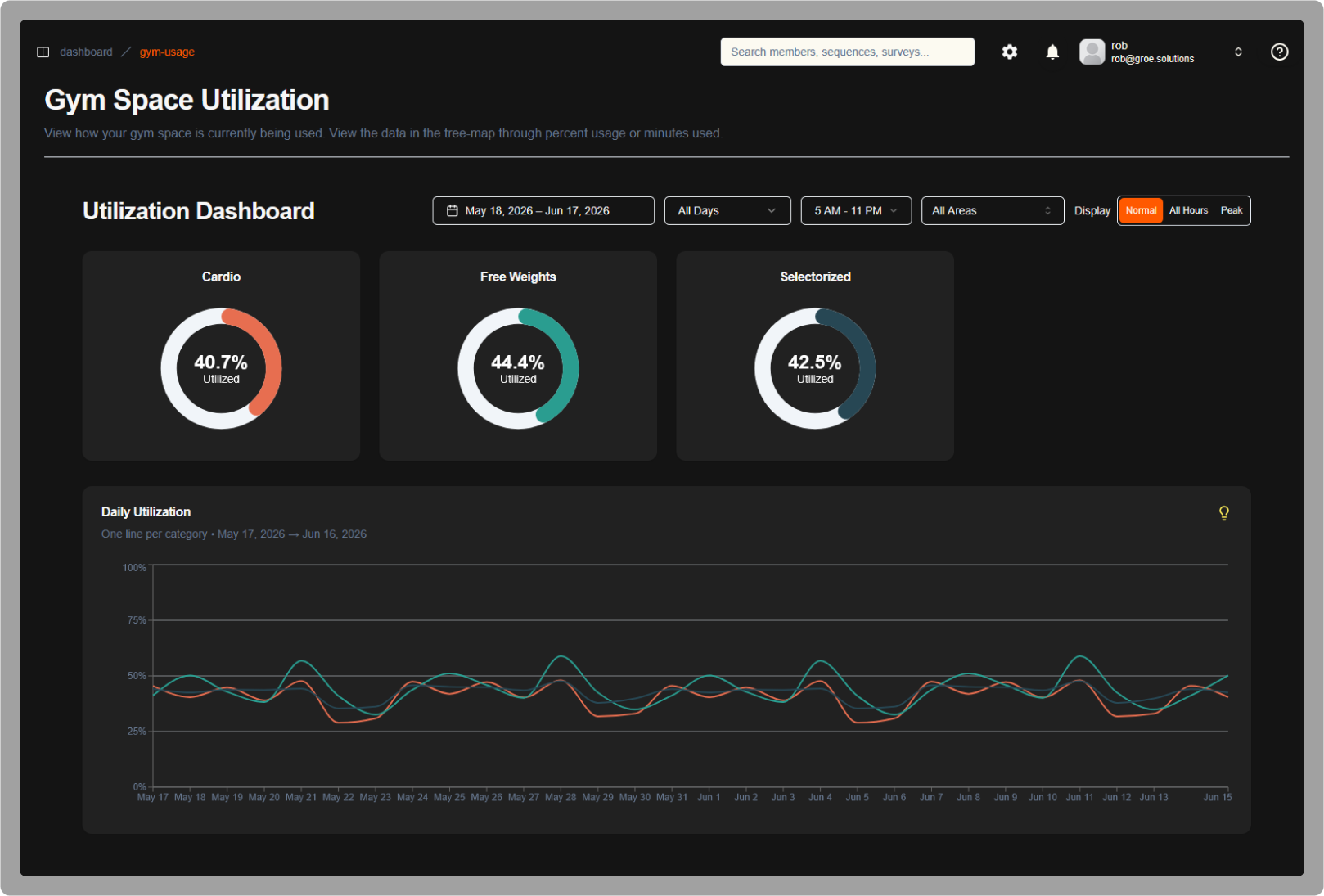
Tools like Groe's live usage meter transform how members experience peak hours:
- Zone-level visibility: Members can see which areas are busy before they arrive
- Predictive analytics: Forecast busy times based on historical data
- Member decision support: "Come now" vs. "Wait 30 minutes" guidance
Digital Queue Management
For high-demand equipment:
- Virtual waiting lists: Members can queue for specific equipment via app
- Booking windows: Reserve popular machines during peak hours
- Usage alerts: Notify members when their preferred equipment becomes available
Strategy 5: Member Education and Culture Building
Train Your Members, Not Just Your Staff
Peak hour success depends on member cooperation:
Education Topics:
- Proper equipment sharing etiquette
- Efficient workout planning for busy times
- Understanding why certain rules exist
Delivery Methods:
- Short video tutorials at check-in
- Digital signage with quick tips
- Staff-led mini-sessions during slow periods
Create a "Peak Hour Community"
Turn a challenge into a bonding opportunity:
- Peak hour challenges: Group goals for efficient workouts
- Recognition programs: Highlight members who exemplify good peak hour behavior
- Social elements: Designated areas for quick social interaction
Strategy 6: Facility Design and Layout Optimization
Traffic Flow Engineering
Your gym's layout significantly impacts peak hour experience:
Critical Design Elements:
- Wide main pathways: Minimum 4-foot corridors between equipment
- Clear zoning: Distinct areas for different workout types
- Equipment grouping: Cluster similar machines to reduce cross-traffic
- Multiple entry/exit points: Prevent bottlenecks at popular zones
Flexible Space Utilization
Design spaces that can adapt to different crowd levels:
- Convertible areas: Spaces that serve different functions at different times
- Mobile equipment: Equipment that can be rearranged based on demand
- Multi-use zones: Areas that support multiple activity types
Measuring Success: Key Performance Indicators
Track these metrics to evaluate your peak hour strategies:
Benchmark: Aim for at least 20% improvement in peak hour satisfaction within 3 months of implementation.
Common Mistakes to Avoid
Don't Make These Peak Hour Errors:
The Groe Advantage: Smarter Peak Hour Management
Groe's platform provides the data and tools needed for effective peak hour management:
- Real-time visibility: See exactly where and when crowding occurs
- Member-facing guidance: Help members make better timing decisions
- Operational intelligence: Data-driven insights for staff deployment
- Predictive analytics: Forecast busy periods before they happen
Case Study: A mid-sized gym reduced peak hour complaints by 65% and improved member retention by 18% after implementing Groe's live usage system combined with the strategies above.
Conclusion: Turning Peak Hours into Peak Performance
Peak hours are inevitable, but peak hour problems are optional. By combining strategic planning, clear communication, member education, and smart technology, you can transform your busiest times from a source of frustration into a demonstration of your gym's excellence.
Remember: Members don't expect empty gyms at 6 PM. They expect transparency, fairness, and a reasonable chance to complete their workout. Deliver that consistently, and peak hours become proof of your gym's popularity rather than a reason for cancellation.
Ready to optimize your peak hour management? Learn how Groe can help