
Gym Member Retention: The Psychology of Lasting Habits
There is no shortage of books telling us how to change our habits.
Make the good behavior obvious. Make it easy. Make the bad behavior difficult. Start with a goal so small you cannot talk yourself out of it. Attach the new routine to something you already do. Reward the repetition.
The psychology behind engagement also shapes the operational signals worth watching. Explore how operators can identify members whose routines are changing.
All of that is useful.
It is also incomplete.
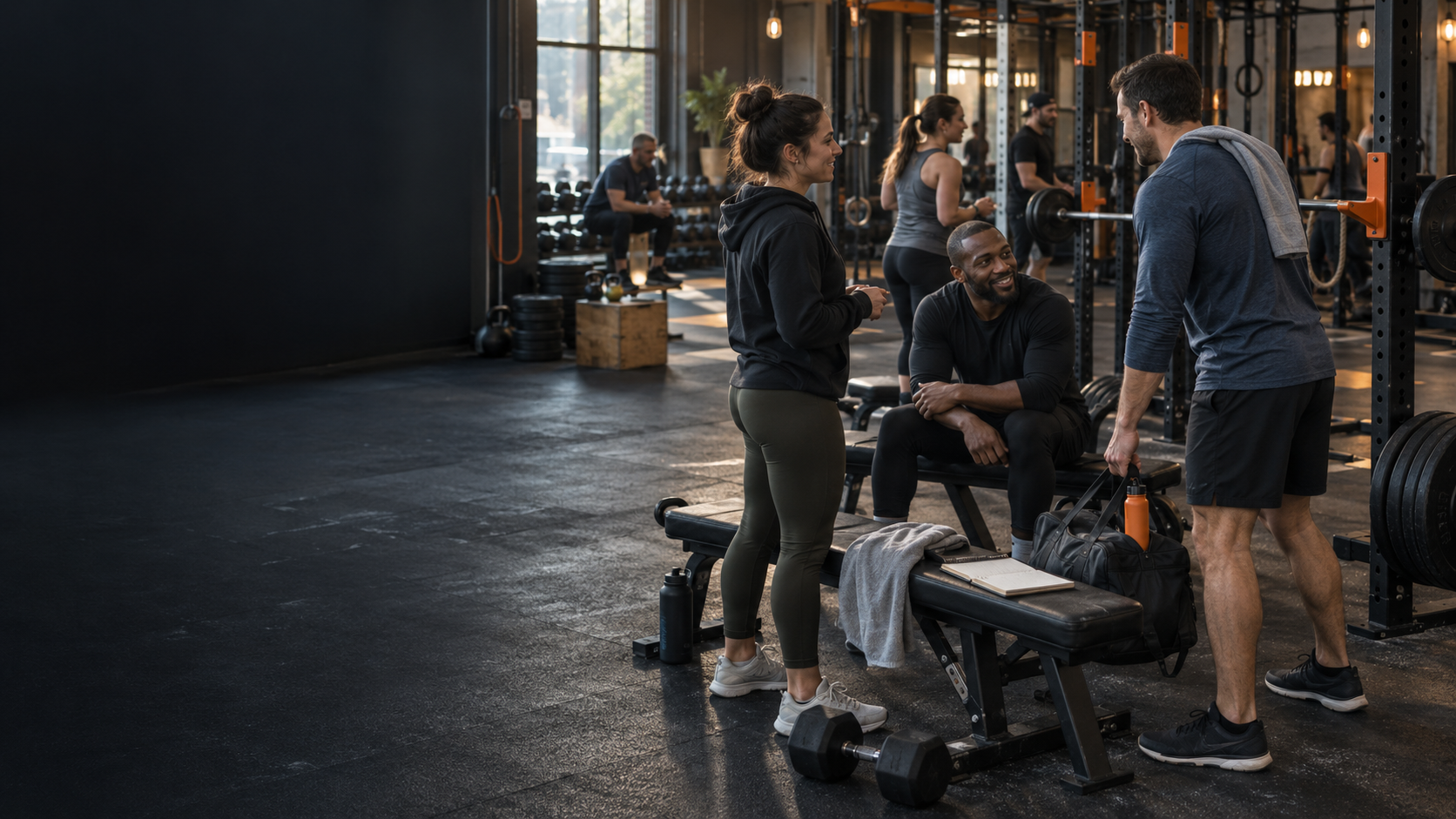
Habits do not form in a vacuum. They form in kitchens, calendars, commutes, workplaces, neighborhoods, friend groups, and the rooms we repeatedly enter. Research identifies frequency, reward, and a stable context as core ingredients associated with automatic behavior. [1]
Research on physical activity also shows that our social networks—their size, composition, similarity, and exposure to exercise—are associated with how active we become. [2]
We already understand this intuitively. We say that if you want to understand someone, look at their circle of friends. We recognize that much of what people consider normal was taught by their families, reinforced by their peers, and made easier or harder by their environment.
Yet when someone fails to build a fitness habit, we often treat it as an isolated failure of discipline.
Maybe fitness habits are not merely personal routines. Maybe they are socially constructed—or, more precisely, socially scaffolded.
That changes the role of the gym.
A gym is not simply a building where people perform a habit they developed somewhere else. It is an environment capable of helping that habit take root. In our earlier article, The Psychology of Gym Member Retention, we organized retention around autonomy and competence, habit formation, belonging, progress, and fairness. [3]
The next question is how a gym turns those principles into a system people can live inside.
I believe there are four places to start.
1. Make It Easy—but Define “Easy” Correctly
Making exercise easy does not mean making every workout easy.
It means removing unnecessary friction between a member’s intention and their ability to act.
For a gym owner, one of the most important forms of friction is equipment availability. A broken machine is unavailable, but so is a machine that is technically operational and perpetually occupied.
Those are different operational problems with the same member outcome: the workout they planned is interrupted.
A 2026 study analyzed satisfaction data from 10,368 users across five Spanish fitness-center chains. Among the most influential factors were the overall environment, employee trustworthiness, staff quality, and the management of waiting times. [4]
That means uptime is only part of equipment availability. A gym also has to understand demand by time of day, equipment category, workout pattern, and member population.
Can members complete the workout they came to do?
How often are they forced to abandon an exercise, change the order of their routine, or wait without knowing how long the wait will be?
How many people leave frustrated even though every machine was technically working?
This is where better information can create immediate value. A gym may not be able to make another squat rack appear at 5:30 p.m., but it can tell a member that the racks are likely to be crowded, suggest a less congested time, or offer an appropriate alternative.
Research on waiting in other service settings suggests that satisfaction is shaped not only by the duration of a wait, but by how that wait compares with what the person expected. Applying that finding to gyms is an inference, not a gym-specific experimental result, but the operational lesson is useful: uncertainty makes friction worse. [5]
Bad news early is information.
Bad news when a member is already standing beside the machine is frustration.
Live and forecasted usage information also gives something back to the member: agency. They can decide whether to change the time, change the plan, or accept the wait. The gym has not eliminated every constraint, but it has allowed the member to plan around reality instead of being surprised by it.
“Make it easy” therefore means more than reminders and motivational messages. It means measuring demand, maintaining equipment, reducing avoidable bottlenecks, communicating honestly, and designing reasonable alternatives.
Motivation should not have to fight the building.
2. Facilitate Social Belonging
Social connection is one of the strongest forces available to a gym.
People who train with spouses, relatives, friends, teammates, and workout partners have something the individual exerciser does not: another person helping make the behavior normal.
A systematic review of 28 adult physical-activity studies found that network size, composition, similarity, and exposure to active people were associated with individual physical activity. The authors concluded that behavior-change efforts should engage the social influences around a person rather than focusing only on the individual. [2]
Gyms understand this, which is why they invest in group training, challenges, events, clubs, and community programming.
But putting people in the same room does not automatically create belonging.
A 2026 meta-analysis comparing individual and group-based physical-activity interventions found only a small, statistically non-significant overall advantage for group conditions. The researchers also noted that positive social dynamics do not naturally emerge merely because an activity happens in a group. [6]
A crowded class can still be a lonely place.
Group training also operates on a rigid schedule. Every fixed time selects for the people whose lives fit that time. Shift workers, parents, caregivers, and people with unpredictable schedules may want community just as much as everyone else, but they cannot always arrive when the community calendar tells them to.
Digital tools can extend access. They can help people communicate, coordinate, celebrate progress, and stay connected between visits. But a chat feed is not automatically a community.
The evidence here is nuanced. A 2025 meta-analysis of 40 randomized trials found that some digital interventions reduced loneliness, particularly when they included psychological, group, or activity-based components. Simple social-contact interventions and self-guided individual activities showed more limited effects. [7]
A separate review of physical-activity interventions among older adults found that adding smart technology to face-to-face interventions improved some physical-activity measures, while technology used alone did not produce significant differences. The researchers rated the evidence as very low quality. [8]
Digital can extend a relationship.
It does not become a relationship simply because a notification was sent.
I was reminded of that while watching the 1995 film Powder with my daughters. The story follows a brilliant young man with extraordinary abilities who is treated as an outsider by nearly everyone around him. At one point he says:
“Inside most people there’s a feeling of being separate, separated from everything. And they’re not.” [9]
It is a beautiful message. Making someone genuinely feel it is another matter.
An automated message saying, “We miss you,” means very little when no one at the gym has learned the member’s name.
Members, employees, and frankly all of us learn culture the way children do: less from what authority figures say than from what they repeatedly do.
Does the front-desk associate look up and greet the person?
Does an instructor introduce a newcomer to someone else?
Does a staff member notice confusion before it becomes embarrassment?
Does someone make room?
Does anyone notice when the member’s behavior changes?
In the Marines, a new person was not expected to arrive at a unit and figure out the culture alone. Someone had to receive them, introduce them, teach the standards, and explain the things no handbook could fully capture.
A gym needs its own version of that.
Not endless hand-holding. Not forced friendship. A deliberate process for receiving people and helping them find their place.
That is easier said than done. Research places fitness-club membership withdrawal and exercise dropout in the range of 40–65% during the first six months. [10]
Meanwhile, the gym owner is selling memberships, repairing equipment, managing payroll, developing staff, cleaning the facility, and trying to create a community.
It can feel like being in a sinking boat that is on fire while rowing away from shore.
That is why systems matter.
Before owners and staff can do the people work, they need scalable and repeatable processes that create time for it. Technology should organize information, identify bottlenecks, route tasks, and show staff where human attention may matter most.
The goal is not to automate caring.
The goal is to automate enough of the surrounding work that people have time to care.
Build the kind of gym members stay connected to
3. Develop Member Competence
People are unlikely to build a lasting relationship with a place where they repeatedly feel lost, incapable, or embarrassed.
Competence matters. A systematic review of 66 studies found consistent support for the relationship between competence satisfaction and exercise participation. It also found that more autonomous forms of motivation were associated with exercise, with intrinsic motivation appearing especially important for longer-term adherence. [11]
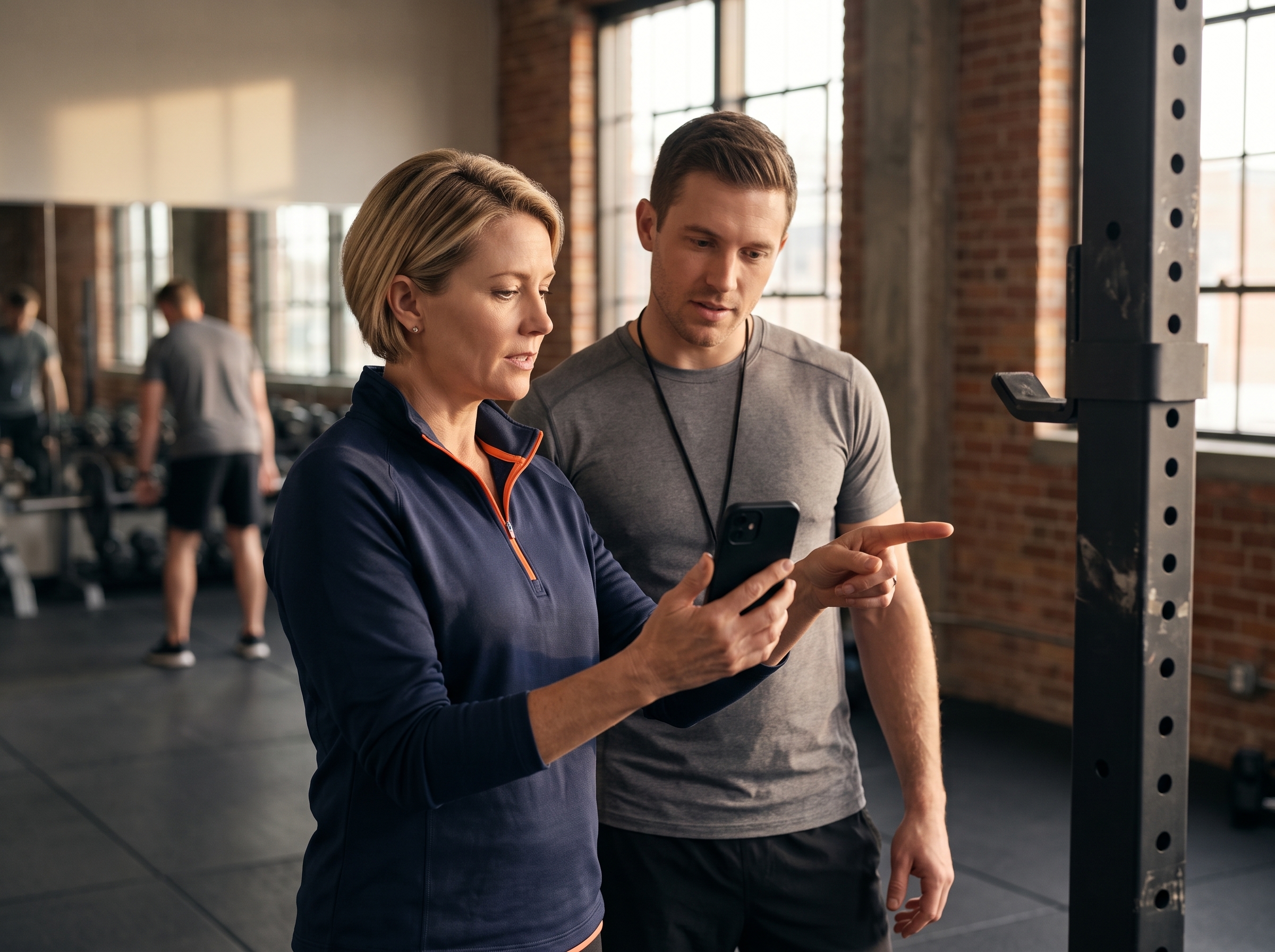
The most straightforward way to begin building competence is a real member-onboarding process.
Not a facility tour.
Not a waiver, an app download, and a hope that the member figures it out.
Good onboarding should establish what the person is trying to accomplish, why it matters to them, what experience they already have, what their schedule allows, where they feel uncertain, how they prefer to receive support, and what could realistically interrupt their plan.
It should also teach the behavior surrounding the workout.
Where will the gym bag be placed the night before? What time will the person leave? What is the fallback routine when the gym is crowded? What happens when work runs late? What is the minimum version of the workout that still preserves the habit?
A year-long experiment involving 751 new users of an online exercise platform found some support for an intervention focused on preparation habits. It improved measures of participation and habit strength, although several other expected effects in the study were not statistically significant. The finding is not a substitute for a gym-onboarding trial, but it reinforces an important idea: the actions before exercise can be as important as the workout itself. [12]
Onboarding also gives the gym an initial understanding of the member’s goals, preferences, routines, and baseline behavior. That creates meaningful touchpoints for future conversations.
But onboarding cannot be treated as a one-time data-collection event followed by rigid 30-, 60-, and 90-day messages.
People live fluid lives.
Their jobs change. Their children’s schedules change. Their health changes. Their confidence changes. Their goals change. The person training for a wedding may later be training to manage stress. The person chasing a personal record may suddenly be working around pain.
Those changes often appear in behavior before they are explained in words.
A member who has not checked in for 21 days has generated a lagging signal. Whether that threshold predicts cancellation must be validated in each gym, but waiting for complete absence means responding after the behavior has already changed.
A meaningful change from the member’s personal baseline may create an earlier opportunity. Perhaps visits become shorter. The person stops using an area they previously used. Training frequency declines. Loads decrease. Exercises change.
A 20% reduction in someone’s bench press over two weeks is not, by itself, a validated predictor of cancellation. It could be a planned deload, poor sleep, an injury, a new program, or nothing important at all.
The value is not in pretending the data provides an answer.
The value is in recognizing that the change may justify a question:
“Hey, I noticed your training has looked a little different lately. Is everything going the way you want it to?”
The signal should initiate a conversation, not generate a verdict.
That distinction is central to the research architecture Groe Solutions has been developing around human-performance interactions. Artificial intelligence may help make changes and coaching patterns more visible, but the system must remain human-first: consent, context, validated measures, formative support, and professional judgment before automated evaluation. [13]
The purpose of member data is not to catch people failing.
It is to help a human notice before someone begins believing they have failed.
4. Give the Effort a Purpose
Lately, it has been difficult to miss the rise of HYROX.
HYROX uses a standardized format: a one-kilometer run followed by a functional workout station, repeated eight times. That consistency creates a common test and comparable results across events and divisions. [14]
According to HYROX, more than 1.5 million athletes participated during its 2025–26 season, and the organization projected more than two million athletes across 107 race weekends in 2026–27. [15]
My hypothesis is that its rise is not explained by exercise programming alone.
HYROX adds a destination.
A traditional group class gives people a shared room, a coach, and a scheduled workout. That can be valuable. HYROX layers on a date, a common standard, measurable progression, a public identity, and the possibility of competing alongside other people.
There is a difference between sharing a room while exercising and sharing a room while preparing for something together.
A class gives the group structure.
A shared goal gives the group direction.
That purpose does not have to be a race. It may be preparing for a hike, playing with grandchildren, passing a fitness test, returning to a sport, moving without pain, supporting mental health, or simply becoming the kind of person who keeps promises to themselves.
The gym’s job is not to assign one grand purpose to everyone.
It is to keep helping each member answer a living question:
What are we training for now?
The word now matters because purpose must be revisited. Static goals placed in a customer relationship management system do not account for changing lives.
A goal is not something a gym collects.
It is something a gym helps a person continually renew.
Gyms Are Not the Only Organizations Asking This Question
In 2026, the National Institutes of Health (NIH) published two highlighted research topics that point directly toward this larger problem.
The first, Digital Health and Artificial Intelligence Tools for Biomedical and Behavioral Research: Validity and Utility, encourages rigorous evaluation of digital health and artificial-intelligence tools across populations and settings. It emphasizes reliability, real-world usefulness, data security, privacy, governance, and bias mitigation. The participating organizations include the Office of Behavioral and Social Sciences Research (OBSSR) and multiple NIH institutes and centers. Importantly, this is a highlighted topic—not a Notice of Funding Opportunity (NOFO) by itself. [16]
The second, Interventions to Promote Health by Fostering Connectedness, calls for rigorous research into how connectedness may improve health or reduce chronic-disease risk. Its definition of connectedness extends beyond interpersonal relationships to communities, hobbies, sports, culture, arts, nature, and other activities. It explicitly allows interventions to be studied in nonmedical settings and encourages partnerships with organizations capable of delivering them. This is also a highlighted topic rather than a standalone NOFO. [17]
The participating organizations approach the problem from different directions.
The National Institute on Aging (NIA) is interested in connectedness among older adults, aging in place, physical spaces, and neighborhood resources. The National Center for Complementary and Integrative Health (NCCIH) includes interests related to pain, resilience, well-being, physical functioning, and whole-person health. [16, 17]
One population may be dealing with aging.
Another may be dealing with chronic pain.
Another may be isolated.
Another may be physically capable but unsure where they belong.
Human beings may be the most complex systems we have ever attempted to understand, so gym owners should not feel inadequate because behavior change is difficult. Researchers, healthcare organizations, government agencies, employers, coaches, and technology companies are all wrestling with pieces of the same problem.
But it is also possible that we are overcomplicating part of it.
Maybe circumstances vary, but the underlying need is often the same.
Maybe people want to be seen.
Maybe they want to be supported.
Maybe they want someone to believe in them long enough for them to borrow a little courage and begin reaching upward.
GROE SOLUTIONS / SOURCE NOTES
Sources & References
Numbered citations in the article correspond to the sources below. Links were verified during preparation in September 2026.
[1] McCloskey, K., & Johnson, B. T. (2019). “Habits, Quick and Easy: Perceived Complexity Moderates the Associations of Contextual Stability and Rewards With Behavioral Automaticity.” Frontiers in Psychology, 10, 1556. https://doi.org/10.3389/fpsyg.2019.01556
[2] Prochnow, T., & Patterson, M. S. (2022). “Assessing Social Network Influences on Adult Physical Activity Using Social Network Analysis: A Systematic Review.” American Journal of Health Promotion, 36(3), 537–558. https://doi.org/10.1177/08901171211060701
[3] Owens, R. (2026, August 3). “The Psychology of Gym Member Retention: Behavioral Science Behind Member Loyalty.” Groe Solutions. groe.solutions/blog/the-psychology-of-gym-member-retention-behavioral-science-behind-member-loyalty
[4] Alonso Dos Santos, M., García Fernández, J., Pérez Campos, C., & Cuevas Lizama, J. (2026). “Machine Learning Prediction of Customer Satisfaction in Fitness Centres.” Scientific Reports. Advance online publication. https://doi.org/10.1038/s41598-026-55627-1
[5] Caruelle, D., Lervik-Olsen, L., & Gustafsson, A. (2023). “The Clock Is Ticking—Or Is It? Customer Satisfaction Response to Waiting Shorter vs. Longer Than Expected During a Service Encounter.” Journal of Retailing, 99(2), 247–264. https://doi.org/10.1016/j.jretai.2023.03.003
[6] Kritz, M., Riddell, H., Olsen, D., Harden, S. M., Burke, S. M., Ntoumanis, N., & Thøgersen-Ntoumani, C. (2026). “Individual Versus Group-Based Interventions: A Systematic Review and Meta-Analysis of Physical Activity, Functional, Psychosocial and Health Outcomes.” Nature Human Behaviour, 10, 1109–1121. https://doi.org/10.1038/s41562-026-02429-0
[7] Hansen, T., Johansen, R., Kirkøen, B., Stene-Larsen, K., Straiton, M., Tornes, R. A., & Reneflot, A. (2025). “Digital Bridges to Social Connection: A Systematic Review and Meta-Analysis of Digital Interventions for Loneliness and Social Isolation.” Internet Interventions, 41, 100856. https://doi.org/10.1016/j.invent.2025.100856
[8] D’Amore, C., Reid, J. C., Chan, M., Fan, S., Huang, A., Louie, J., Tran, A., Chauvin, S., & Beauchamp, M. K. (2022). “Interventions Including Smart Technology Compared With Face-to-Face Physical Activity Interventions in Older Adults: Systematic Review and Meta-Analysis.” Journal of Medical Internet Research, 24(10), e36134. https://doi.org/10.2196/36134
[9] Salva, V. (Writer & Director). (1995). Powder [Film]. Hollywood Pictures. Dialogue quotation verified against published film transcripts. IMDb quotation record
[10] Gjestvang, C., Tangen, E. M., Arntzen, M. B., & Haakstad, L. A. H. (2023). “How Do Fitness Club Members Differentiate in Background Characteristics, Exercise Motivation, and Social Support? A Cross-Sectional Study.” Journal of Sports Science & Medicine, 22(2), 235–244. https://doi.org/10.52082/jssm.2023.235
[11] Teixeira, P. J., Carraça, E. V., Markland, D., Silva, M. N., & Ryan, R. M. (2012). “Exercise, Physical Activity, and Self-Determination Theory: A Systematic Review.” International Journal of Behavioral Nutrition and Physical Activity, 9, 78. https://doi.org/10.1186/1479-5868-9-78
[12] Phillips, L. A., More, K. R., Lamoureux, N. R., Dixon, P. M., Meyer, J. D., Ellingson, L., Welk, G., & Hastings, B. (2025). “A Full-Factorial Test of Motivational and Volitional Intervention Strategies for Promoting Exercise Habit Formation and Exercise Maintenance Among New Users of an Online Exercise Class Platform.” Applied Psychology: Health and Well-Being, 17(1), e12597. https://doi.org/10.1111/aphw.12597
[13] Groe Solutions. (2026, August). trAIners: Ambient AI as a Competency Infrastructure for Human Performance Coaching (Version 1.0, internal working draft).
[14] HYROX. (2026). Season 26/27 Rulebook: Single. maintain.hyrox.com/rulebooks/HYROX_RulebookSingles_EN.pdf
[15] Endurance.biz. (2026, July 20). “Targeting 2 Million Athletes: HYROX Expands Global Calendar for 2026/27 Season.” Participation totals are presented as figures reported or projected by HYROX. endurance.biz/2026/industry-news/targeting-2-million-athletes-hyrox-expands-global-calendar-for-2026-27-season/
[16] National Institutes of Health. (2026, June 26). “Digital Health and Artificial Intelligence Tools for Biomedical and Behavioral Research: Validity and Utility.” Highlighted Topic. grants.nih.gov/funding/find-a-fit-for-your-research/highlighted-topics/97
[17] National Institutes of Health. (2026, August 11). “Interventions to Promote Health by Fostering Connectedness.” Highlighted Topic. grants.nih.gov/funding/find-a-fit-for-your-research/highlighted-topics/64
Prepared for publication by Groe Solutions • September 2026