
Gym Owner Analytics in 2026: Track Metrics Beyond Check-Ins
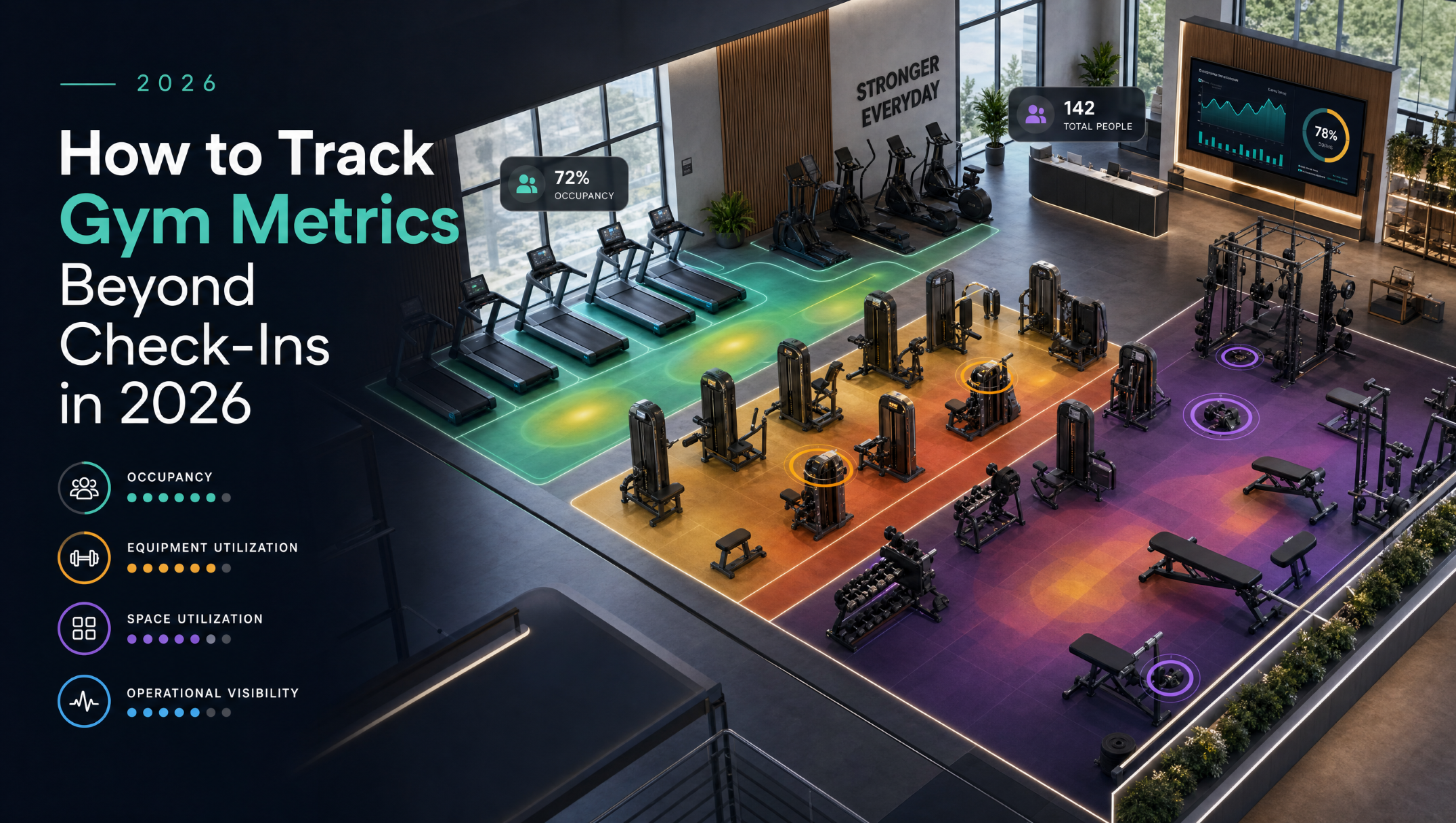
How to Track Gym Metrics Beyond Check-Ins in 2026
If you run an independent gym, attendance alone only tells you who walked through the door. It does not tell you whether members found the space crowded, whether certain equipment is always in use, whether traffic patterns support your staffing plan, or whether the facility experience is quietly affecting retention.
That is why gym owner analytics in 2026 needs to go beyond basic check-ins.
For a closer look at putting attendance, equipment, and space data into context, see what gym intelligence adds to existing systems.
Check-ins are useful, but they are a lagging signal. They tell you a member visited. They do not tell you how they used the gym, what they avoided, where friction built up, or how close you may be to losing a member who has started to disengage. To make better operational decisions, gym owners need a clearer view of utilization, occupancy, and behavior.
If you only track attendance, you miss the metrics that explain revenue, retention, and member experience.
Why check-ins are no longer enough
Traditional attendance data answers one question: did a member show up?
That is not enough to run a modern facility well.
A gym can have solid attendance numbers and still suffer from overcrowded training zones, underused equipment, poor peak-hour staffing, or a layout that creates friction during busy times. Check-ins do not reveal whether the gym felt comfortable or congested. They do not show which areas got heavy use and which areas were ignored. They do not explain whether members were getting the value they expected from the space.
That is the gap more advanced gym management software and utilization tracking are meant to fill.
The next layer of visibility is not just who came in. It is how the gym was actually used.
The gym metrics that matter most in 2026
Space utilization
Space utilization shows which parts of the gym are busy, underused, or consistently overcrowded.
This matters because layout influences both member experience and business performance. If one training zone is always packed while another stays empty, you have a clear operational signal. You may need to reassign floor space, move equipment, change programming, or rethink how members flow through the facility.
Space utilization also helps you make better decisions about expansion. Before investing in more square footage, you should know whether the current floor plan is being used efficiently.
For independent gym owners, this metric turns floor design into a measurable decision instead of a guess.
Equipment utilization
Equipment utilization tells you which machines and stations are actually used, when they are used, and how often they create bottlenecks.
This is especially valuable when you are deciding what to buy, replace, or retire. If one area of the gym is constantly occupied while another set of machines rarely gets touched, your purchasing decisions should reflect that reality.
Equipment utilization can also reveal hidden costs. Dead assets still occupy valuable space. Overused equipment can create waiting times, frustration, or maintenance pressure. Both can affect the member experience.
When equipment usage is visible, you can make smarter decisions about the floor plan, capital investment, and maintenance priorities.
Gym occupancy data
Gym occupancy data gives you a clear view of crowding, peak hours, and traffic patterns across the day and week.
This is one of the most practical metrics for day-to-day operations. It helps with:
- staffing schedules
- cleaning cadence
- class timing
- peak-hour planning
- member comfort
Occupancy is not the same as attendance. Two gyms can have the same number of check-ins and very different experiences. One may feel calm and open; the other may feel crowded and difficult to navigate.
That distinction matters. If members consistently experience busy windows as frustrating, they may shorten visits, avoid certain times, or gradually disengage.
Occupancy data lets you respond before that happens.
Member retention metrics
Retention is where operational data becomes business data.
The most useful member retention metrics go beyond simple churn counts. Look at:
- visit frequency
- early drop-off after onboarding
- declining engagement over time
- changes in preferred visit windows
- reduced use of the facility before cancellation
These signals often appear before a member fully leaves. If you track them early enough, you can intervene with better onboarding, targeted outreach, or an improved in-gym experience.
The important point is that retention is not only a sales or marketing problem. It is also an experience problem. If members stop feeling that the gym fits their routine, they are more likely to disengage.
Better utilization and occupancy data can help you spot that risk sooner.
Fitness business KPIs
The strongest fitness business KPIs combine operational signals into a management view that supports real decisions.
Good KPI sets connect:
- utilization
- occupancy
- retention
- revenue
- member satisfaction
That gives owners a more complete picture of performance. Instead of looking at attendance in isolation, you can see how facility use relates to member behavior and business outcomes.
For small gym operations, this matters because every square foot and every staff hour has to work hard. For multi-site operators, it matters because consistency across locations depends on knowing what actually happens on the floor, not just what gets reported in a dashboard.
What these metrics reveal that check-ins cannot
Check-ins show attendance. Utilization shows value delivery.
That is the real difference.
A member may check in regularly but mostly use the same corner of the gym. Another member may visit less often but spend more time engaging with the equipment and services that matter. Without utilization data, those differences stay hidden.
Occupancy data adds another layer. It shows whether the gym feels full, comfortable, or congested at a given time. That can affect everything from staff workload to member satisfaction.
Equipment and space metrics reveal hidden inefficiencies too. You may discover that one area is consistently overcapacity while another remains underused. Or that a popular machine is driving traffic in a way that suggests demand for a different layout.
These are the kinds of insights that basic attendance reports cannot provide.
See What Your Gym Data Is Really Telling You
Practical decisions gym owners can make with better data
Once you have richer operational visibility, you can make better decisions faster.
Here are some of the most useful actions:
- Reallocate floor space based on actual usage patterns
- Add, move, or retire equipment based on demand
- Adjust staffing and cleaning schedules to match traffic patterns
- Improve onboarding and retention programs where engagement drops
- Refine programming and class times to reduce congestion
- Use the same insights across small gym operations and larger multi-site environments
The goal is not just reporting. It is action.
If the data does not change a decision, it is not yet useful enough.
How gym management software and computer vision work together
Gym management software should remain the system of record. It tracks memberships, payments, visits, and core member data.
But software alone usually does not show what is happening in the physical space. That is where computer vision can add another layer.
Used appropriately, computer vision can help gym owners understand:
- occupancy
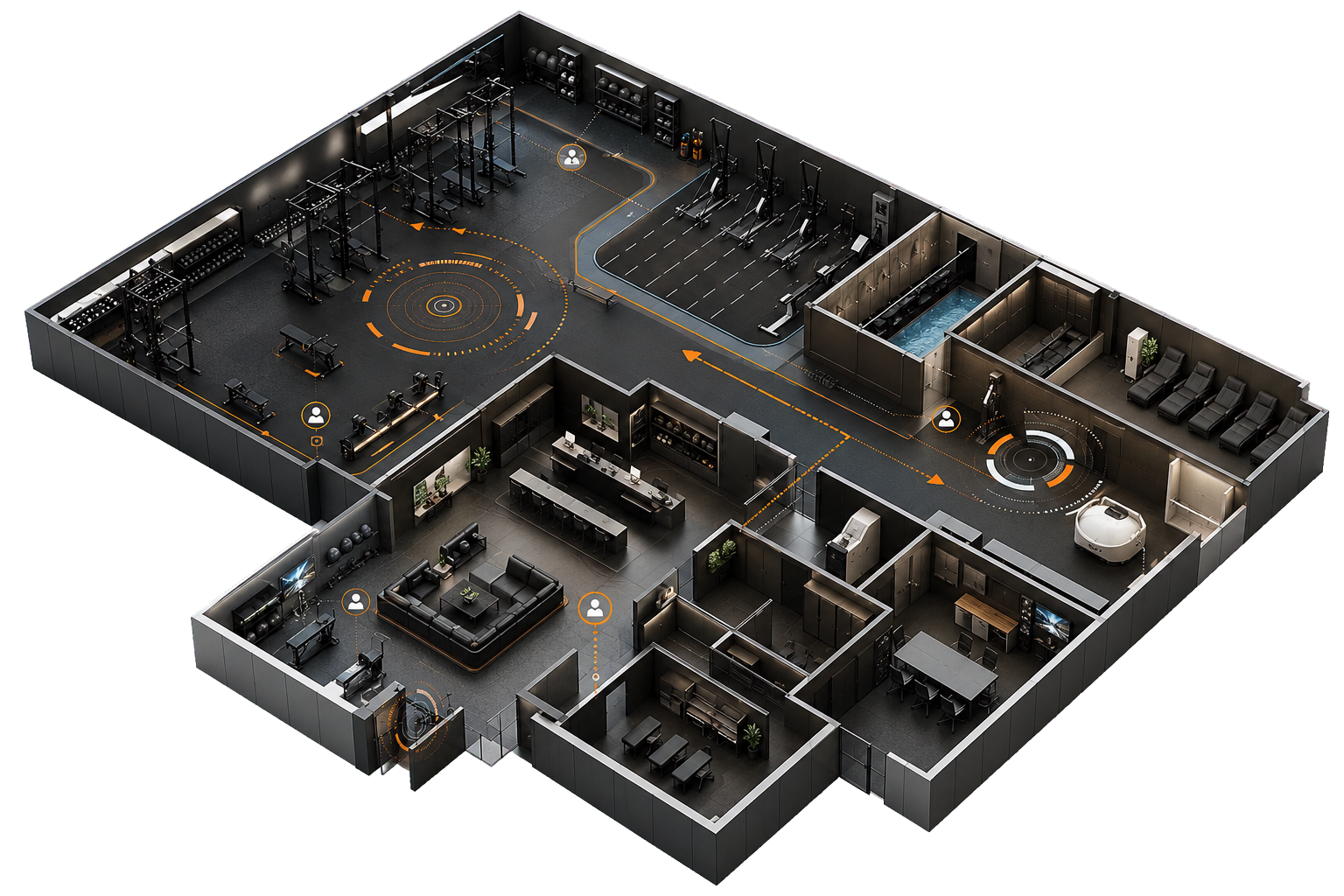
- movement patterns
- space utilization
- equipment usage trends
In practice, this creates richer gym owner analytics because it links member records with real-world behavior on the gym floor. Instead of relying only on manual counts or check-in logs, owners can see how the facility is actually being used.
This is especially helpful when the goal is to understand more than attendance. If you want to know where crowding happens, which zones draw the most traffic, or how usage changes throughout the day, computer vision can help fill in the gap.
The combination of gym software and computer vision is powerful because it connects the administrative side of the business with the operational side.
Why computer vision is the missing layer
Computer vision can be the missing layer because it gives owners a more continuous view of what is happening in the gym.
That matters for three reasons:
- It supports better layout decisions
You can see where members naturally cluster and where space is not working as intended. - It improves staffing and scheduling
If traffic patterns are visible, staffing can match demand more closely. - It helps improve member experience
Fewer bottlenecks, less crowding, and better flow all make the facility feel easier to use.
For owners who want more than manual counts, this kind of visibility turns raw traffic into actionable operational intelligence.
The bottom line
In 2026, the best gym operators will not rely on attendance alone.
They will track utilization, occupancy, retention, and behavior to understand how the business really works. That is what makes gym occupancy data, member retention metrics, and broader fitness business KPIs so valuable. They help owners see what check-ins miss.
If you want to run a smarter gym, start measuring the signals that explain how members actually use the space.
Learn more
Learn more about how computer vision can help gyms measure utilization, occupancy, and member behavior here:
https://groe.solutions/services/computer-vision