
A Better Gym Experience With Live Usage Visualizations
The Machine Is Open: Why Gym Equipment Feels Unavailable (And How to Fix It)
There is a specific kind of frustration that only gym members know—the kind that happens when you've done the hard part. You packed your gym bag, drove across town, walked in after work when your energy was already thin. Maybe you had 45 minutes before pickup, before dinner, before another obligation pulled you back into the rest of your life.
For an operator-focused view of managing congestion, see strategies for managing peak hours.
And then the workout you planned disappears.
Not because you quit. Not because you lacked discipline. Not because you did not want it badly enough. It disappears because the equipment you needed was not available when you needed it.
The squat rack has a towel on it, but no person near it. The cable machine has someone sitting on the bench scrolling through their phone between sets that somehow never start. The dumbbells you need are scattered across the floor. The turf is blocked off for a class. The leg press is technically open, but someone is filming three angles of a set and treating the machine like a private studio.
So you stand there trying not to look annoyed. You adjust. You compromise. You wander. You wait. And by the time you finally start moving, the workout already feels heavier than it should.
For a member, that is not a small inconvenience. That is a broken promise.
Equipment Availability Is Not Always an Overcrowding Problem
A member says, "I can never get on the equipment I need." The operator looks at total check-ins, sees that the building was not at capacity, and assumes the complaint is exaggerated.
But equipment availability is not the same thing as total building occupancy. A club can be only moderately busy and still feel unusable if the wrong zones are packed, the wrong machines are tied up, or the floor behavior is creating artificial scarcity.
That is the part generalized crowd meters miss. A single number that says the gym is 43 percent full tells a member almost nothing about whether their workout is possible.
If the free-weight area is jammed, the cables are occupied, the dumbbell rack is depleted, and the functional turf is reserved, that member does not care that the cardio deck has open treadmills. Their workout is still blocked.
And if you own or operate the gym, this should bother you. Not mildly. Deeply. Because every time a member has to negotiate with the floor just to complete a basic workout, your brand is teaching them that their plan does not matter.
Related reading: How to Optimize Gym Layout for Maximum Member Flow
The Real Reasons Equipment Feels Unavailable
Some availability problems are true demand problems. Peak hours are real. Popular equipment is popular for a reason. If your strength floor is slammed every weekday from 5 to 7 p.m., no dashboard will magically create six more racks.
But a lot of member frustration comes from availability problems that are more operational, behavioral, and design-driven than operators want to admit.
Members Claim Equipment They Are Not Using
The towel on the bench. The bottle by the rack. The phone on the seat. The person rotating across three pieces of equipment during a crowded hour as if the rest of the room signed an invisible contract. This is not utilization. It is possession. And to everyone else on the floor, it feels like the gym has allowed one member to reserve shared equipment without accountability.
Phones Stretch Sets Into Dead Time
Rest time is part of training. No serious person disputes that. But there is a difference between resting and disappearing into a screen while the machine becomes unavailable to everyone else. Members see it. Staff see it. But without a system that makes availability visible and sets clear expectations, floor etiquette becomes a series of awkward one-off confrontations. The result is predictable: the most committed members end up paying the tax for the least considerate behavior.
Social Content Turns Shared Space Into a Private Set
Content creation is now part of gym culture. That is not going away. But when a member's filming setup slows down equipment turnover, blocks movement paths, or makes other members feel like background extras in someone else's post, the gym experience gets worse. Members should not have to choose between finishing their workout and walking through somebody's camera angle.
The Equipment Mix Doesn't Match How Members Actually Train
This is the operator problem hiding underneath the member complaint. Maybe the club has plenty of total equipment, but not enough of the equipment that matters at the times members want it. Maybe the facility overbuilt cardio for a member base that has shifted toward strength. Maybe the dumbbell area is undersized. Maybe functional training demand has outgrown the turf footprint. Without continuous usage data by zone and equipment type, these decisions become a blend of memory, staff anecdotes, and whoever complained loudest last week.
Equipment Can Be Physically Present But Functionally Unavailable
A broken machine is the obvious version. A depleted dumbbell rack is another. So is a cable station missing attachments, a machine that members avoid because it feels off, or a piece that technically works but has become a known frustration point. The Groe broken-equipment research frames this as an awareness problem: members often experience the issue before staff or management has enough visibility to act.
Why Generalized Crowd Meters Don't Solve This
Traditional crowd meters are better than silence, but they are still blunt instruments. They answer the operator's easiest question: how many people are in the building?
That is not the member's question.
The member wants to know: Can I do the workout I came here to do?
Those are very different questions. A gym-wide crowd meter might show a moderate traffic level while the exact zone a member needs is already overloaded. It might show a busy club even though the member's preferred area is wide open. Either way, the member is forced to guess.
Guessing creates stress before the member even walks through the door. It makes the workout feel uncertain. It turns a healthy routine into a small emotional gamble: Should I go now? Should I wait? Am I going to waste the little time I have?
That is why availability data needs to move from generalized occupancy to actual usable visibility.
Groe's Live Usage Meter Changes the Question
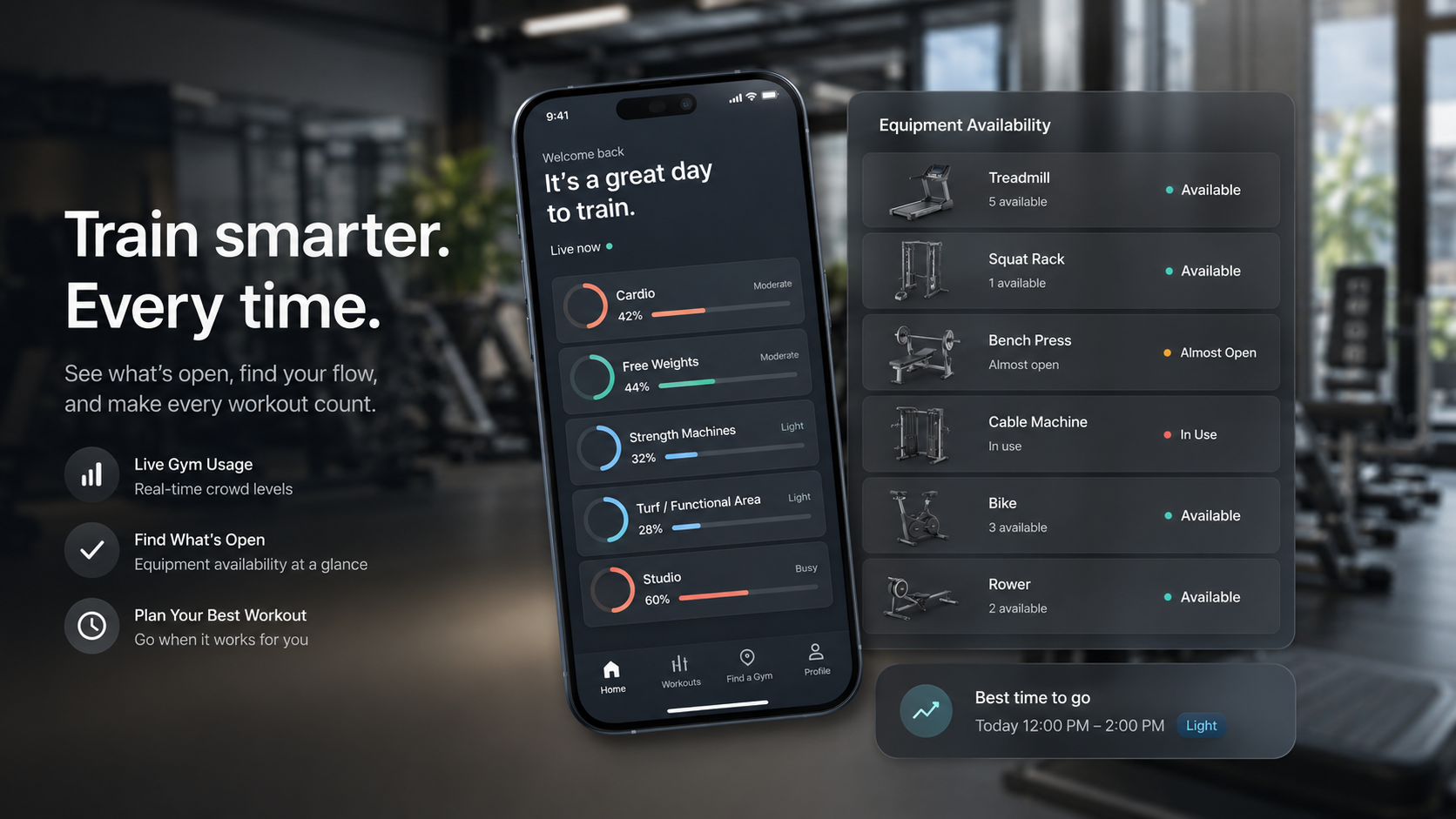
Groe's live usage meter is designed around what members actually need to know. Instead of reducing the entire facility to one vague crowd number, Groe can show live usage by zone, equipment area, or configured space inside the club.
That means a member can see whether the strength floor is packed, whether the cardio area is open, whether the turf is currently active, or whether the equipment zone they care about is likely to be frustrating before they commit their time and energy.
For members, that visibility creates relief. It lets them plan. It gives them a sense of control. It helps them decide whether to go now, shift their workout, or choose a better time.
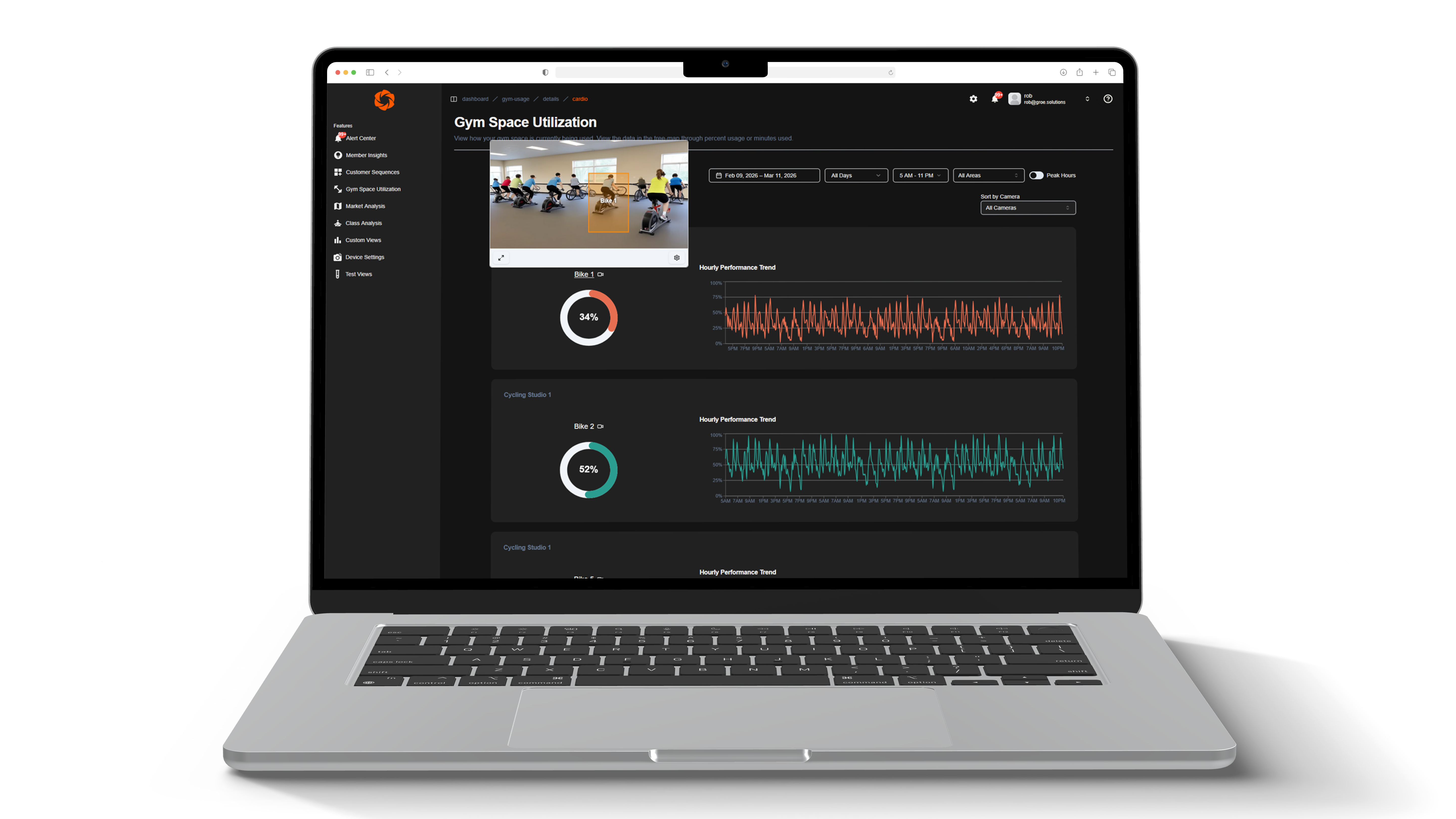
For operators, it does something just as important: it exposes the difference between true crowding and bad experience design.
If the gym is not full but the same zone keeps creating frustration, that is a layout signal. If the same equipment stays occupied longer than expected, that is a behavior signal. If a rack is repeatedly depleted but not actually in use, that is an operations signal. If a class blocks a major training zone during peak member demand, that is a programming signal.
This is where staff and owners should feel the heat. Because once the data is visible, the old excuses get thinner. Members are not always being unreasonable. Sometimes they are accurately describing a problem the operator has never had the tools to see.
Related reading: Peak Hour Management Strategies for Gyms
Ready to eliminate equipment frustration at your gym?
Prepared Members Have Better Experiences
There is also a behavioral-health reason this matters: uncertainty changes how people experience friction.
When people do not know what they are walking into, the brain starts preparing for a problem before the problem even happens. Research on uncertainty and anxiety consistently points to the same pattern: unpredictable situations are more stressful because people cannot plan, avoid, or mentally prepare for what is coming.
That is exactly what a generalized crowd meter does to a member. It gives them just enough information to know the gym may be busy, but not enough to know whether their workout is actually possible.
A live zone usage meter changes the emotional setup. It does not need to promise a perfect floor. It gives the member a clearer picture, and that clarity matters. Perceived control is one of the strongest buffers against stress. When members can see what is happening and choose a plan, they are no longer walking into the gym blind.
This also connects to one of the most practical findings in behavior science: people are more likely to follow through when they have a concrete plan for when, where, and how they will act. In psychology, those are often called implementation intentions. In real gym-member language, it sounds like this: If the squat racks are packed, I will train dumbbells today. If the turf is busy, I will go to cables first. If the strength floor is open now, I am leaving in ten minutes.
That is not just convenience. That is adherence support. Members are not only trying to exercise; they are trying to keep a promise to themselves. Every surprise makes that promise harder to keep. Every bit of useful visibility makes it easier.
The Operator's Choice
Gym owners and staff can keep treating equipment complaints like background noise. They can keep pointing to total check-ins, saying the club was not that busy, and hoping members will adapt.
But members are already adapting. They are changing workout times. They are searching online for the best time to go. They are skipping exercises. They are choosing home workouts. They are trying another facility. Eventually, they are canceling.
And the most frustrating part is that many of these moments are preventable.
Not all of them. No honest operator should promise a perfectly open gym at 6 p.m. on a Monday. But members do not need perfection. They need transparency. They need fewer surprises. They need to know whether the workout they planned is realistic before they spend their time getting there.
Groe's live usage meter gives gyms a way to provide that clarity. It turns facility activity into member-facing guidance and operator-facing intelligence. It helps members walk in prepared, and it helps owners see the exact places where the floor is creating friction.
That operator-facing intelligence is where the business case gets real. Zone-level usage helps owners separate true demand from artificial scarcity. It shows whether the club needs more of a specific equipment type, better programming around peak demand, clearer floor etiquette, a different layout, or a stronger maintenance and replenishment process.
It also protects staff. When leadership can see where friction happens, staff are not left to absorb member frustration with nothing but a clipboard, a shrug, or a difficult conversation on the floor. The system carries more of the burden, and the team gets better information to act on.
For independent operators, that matters because community is not built only through friendliness. It is built through trust. Members stay when the gym feels like it understands their time, their goals, and the small moments that make consistency harder than it needs to be.
Because the real issue is not whether your gym is busy.
The real issue is whether your members can actually use it.