
Why the Fitness Industry Is Behind in Data (And Why That’s Changing Fast)
.jpg)
Introduction
Data has transformed nearly every industry.
Retail uses real-time sales analytics.
Airlines optimize routes with predictive models.
Restaurants track inventory, demand, and staffing with precision.
For operators running more than one club, see how fragmented data limits cross-location visibility.
But the fitness industry has historically lagged behind when it comes to operational data.
Many gyms still rely on:
- spreadsheets
- disconnected management systems
- manual observations
- intuition-based decisions
As the industry becomes more competitive, this data gap is becoming increasingly difficult to ignore.
Forward-thinking operators are now investing in Gym Operations Intelligence platforms and AI analytics to modernize how fitness facilities operate.
Why Gyms Historically Operate Without Strong Data Systems
There are several reasons the fitness industry has been slow to adopt advanced analytics.
Fragmented Technology Systems
Most gyms rely on multiple disconnected tools.
Common systems include:
- member management software
- access control systems
- scheduling tools
- marketing platforms
- billing systems
These systems rarely communicate with each other, making it difficult to build a complete picture of gym operations.
A Gym Data Platform solves this problem by bringing together operational data into a unified view.
Learn how unified data helps gym operators make better decisions with
👉 Unified Operations and Member Data
Lack of Operational Visibility
Most gym operators simply don’t have visibility into how their facility actually functions throughout the day.
Important questions often go unanswered:
- Which equipment is used most?
- Which areas are overcrowded?
- When does member traffic spike?
- Which locations have engagement problems?
This is exactly why tools like Space Utilization analytics are becoming critical.
👉 See how gym operators analyze facility usage with
We explored this topic deeper in our guide:
👉 Gym Space Utilization Explained
Decisions Based on Gut Instinct
Because data has been limited, many gym decisions are based on intuition rather than evidence.
Examples include:
- purchasing new equipment
- expanding floor space
- adjusting class schedules
- hiring additional staff
While experienced operators often have strong instincts, data-driven insights dramatically reduce risk.
Predictive analytics allows operators to identify patterns before problems appear.
The Hidden Cost of Operating Without Data
Running a gym without strong operational data can create several major issues.
Poor Facility Layout Decisions
Without real usage insights, gyms often allocate space inefficiently.
For example:
- too many treadmills
- overcrowded strength areas
- underused functional zones
Utilization data helps operators optimize every square foot.
Member Experience Problems
Overcrowding is one of the biggest causes of gym frustration.
When members frequently encounter:
- long equipment wait times
- congested zones
- poorly managed peak hours
they are far more likely to cancel memberships.
We discussed how this impacts retention in:
👉 Why Gym Member Retention Matters More Than Acquisition
Missed Revenue Opportunities
Operational blind spots can hide major growth opportunities.
Examples include:
- underused training zones
- inefficient class schedules
- misaligned staffing coverage
With AI Analytics for Multi-Location Gyms, operators can identify these opportunities quickly.
Bring Real Data Into Your Gym Operations
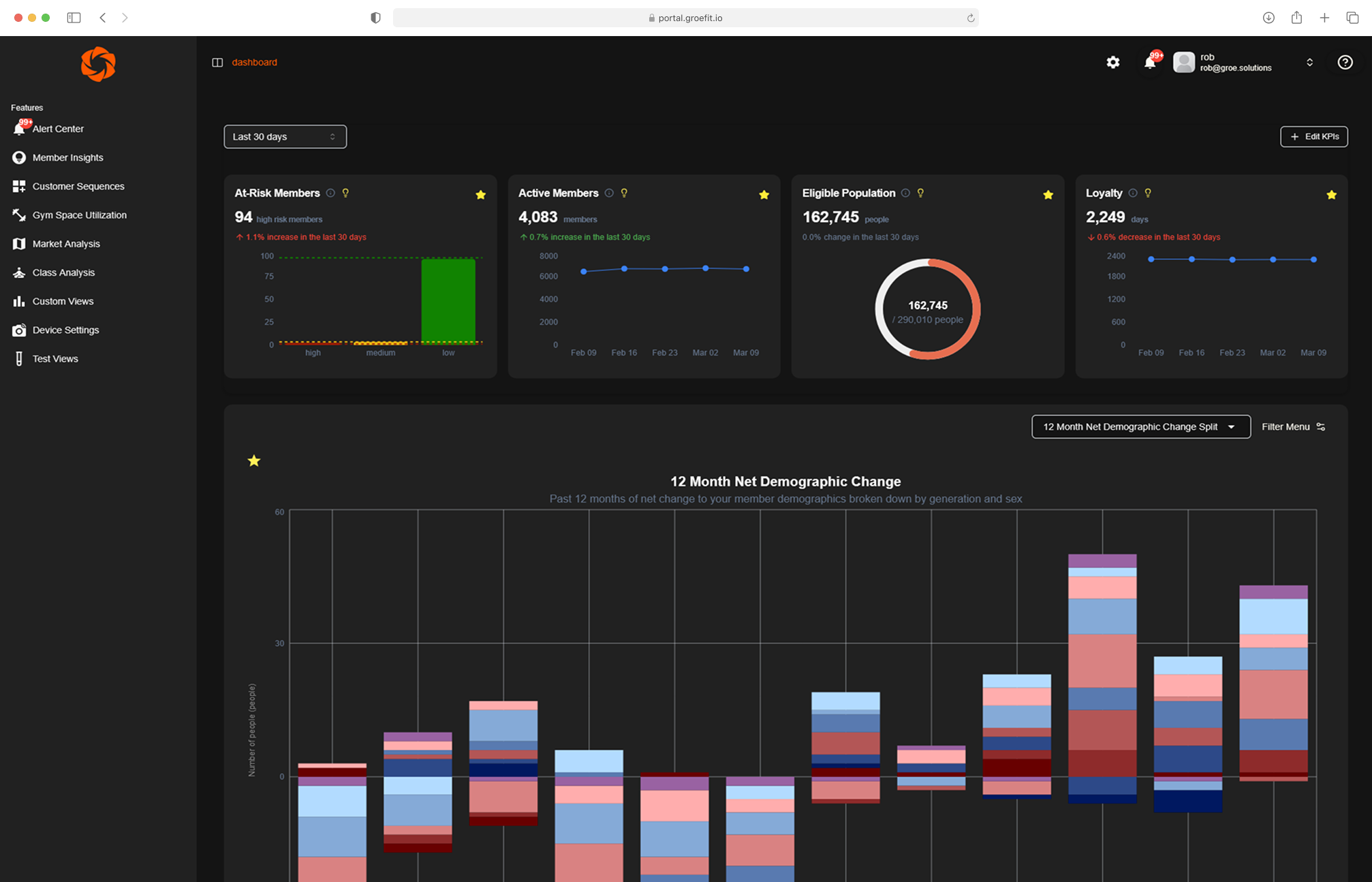
Why the Fitness Industry Is Finally Becoming Data-Driven
Several major trends are pushing the industry toward better analytics.
Increased Competition
The gym industry has become extremely competitive, with over 113,000 fitness facilities operating in the United States.
Operators can no longer rely solely on marketing or pricing strategies to grow.
Operational efficiency and member experience are becoming critical differentiators.
Rising Member Expectations
Consumers increasingly expect personalized, seamless experiences across industries.
Fitness members now expect:
- less overcrowding
- faster service
- personalized training options
- smoother check-in processes
Delivering this experience requires real-time operational insights.
The Rise of AI in Fitness Operations
New technologies are enabling gyms to capture and analyze operational data in ways that were previously impossible.
Computer vision and AI analytics can now monitor:
- facility traffic patterns
- equipment utilization
- zone performance
- peak usage trends
👉 Learn how this works with Computer Vision
These tools convert physical gym activity into actionable operational insights.
What Gym Operations Intelligence Looks Like
Modern fitness businesses are beginning to adopt Gym Operations Intelligence platforms.
These platforms combine:
- member behavior data
- facility utilization analytics
- predictive insights
- operational dashboards
Instead of guessing how a gym operates, leaders can see exactly what is happening across every location.
This enables better decisions about:
- equipment investment
- staffing schedules
- facility layouts
- class programming
- expansion planning
The Future of Data in the Fitness Industry
Over the next decade, the fitness industry will likely undergo a massive transformation in how facilities use data.
The gyms that adopt operational intelligence early will gain major advantages.
They will be able to:
- optimize member experience
- reduce churn
- increase operational efficiency
- scale locations more effectively
Meanwhile, gyms that continue operating without strong data systems may struggle to compete.
Final Thoughts
For years, the fitness industry has operated largely without advanced operational analytics.
But that era is ending.
With the emergence of AI analytics, computer vision, and Gym Operations Intelligence platforms, operators finally have the tools to understand how their facilities truly perform.
And those insights will shape the next generation of successful fitness businesses.